
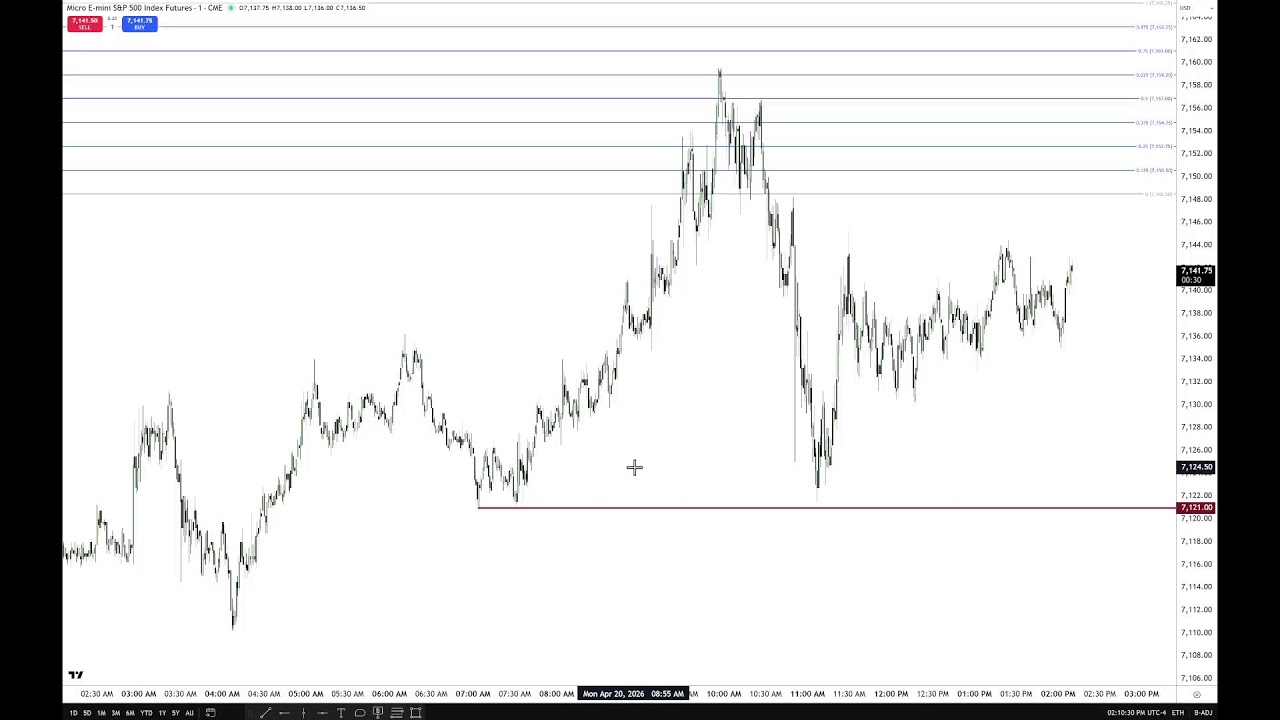
– Topic: trading all-time highs using the ICT PD-array matrix (example: MNQ micro Nasdaq futures).
– Key setup: toggle the continuous contract (not the front-month) to bring price into a usable context; identify the most relevant prior high/wick near current price.
– Primary levels used:
– October 30, 2025 premium wick → consequent-encroachment (midpoint) as a major reference.
– TGIF (20% of the weekly range) as a target area for retracement.
– Friday RTH opening-range gap midpoint (settlement at 4:14pm) as a key intraday level.
– Price-structure rules: premium vs discount wicks, inversion fair-value gaps (FVGs), and sell-side liquidity pools are used to define entries (shorts in this case). “First presented” FVG and consequent-encroachment are priority entry zones.
– Timeframes: drop to 1-minute / sub-minute charts to confirm willingness (or lack thereof) to reclaim midpoints and to spot short-term sell-side imbalances.
– Execution notes: the presenter executed shorts into inversion FVGs, took partials, and missed some additional move due to being away / technical issues; explained why he chose to scale out and not re-enter.
– Risk approach: uses defensive PD-array / “bolo” levels as reliable stop anchors but will not disclose detailed stop-management mechanics.
– Market context: heightened manipulation, geopolitical/news noise (e.g., Strait of Hormuz tweets) makes trading more difficult and increases need for caution and confirmation.
– Practical advice: practice entry drills to overcome fear, journal observations, and use relative strength across correlated indices (NQ vs ES vs YM) to pick which average to trade.
Bottom line: toggle continuous contract, find the closest high/wick and its midpoint, combine weekly TGIF and RTH-gap midpoints with inversion FVGs on lower timeframes, and trade entries only when price structure shows no willingness to reclaim those midpoints — all while accounting for increased market noise.