
https://www.youtube.com/watch?v=nMmihrR-0Q0
– Concept: “L7” or “inside the range” trading — a simple framework for trading within predefined price ranges rather than always needing a directional bias.
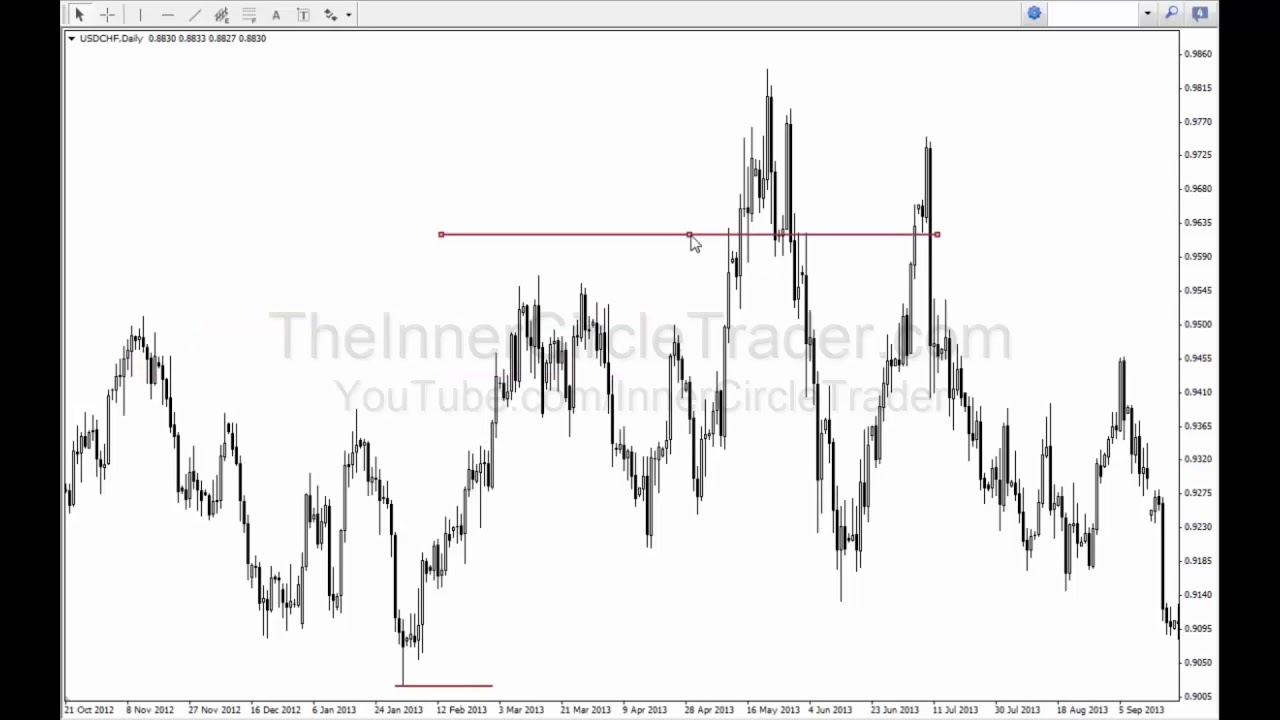
– Core premise: markets spend roughly 70% of the time in ranges. If you know the current range high and low, you can trade short-term reversals and counter-swings with favorable odds.
– Tools/markers: identify range highs/lows, nested (fractal) ranges, and institutional order blocks (bullish/bearish supply–demand zones). Watch for liquidity sweeps and retests of those order blocks.
– Execution: prefer taking trades at the extremes of the active range (sell near range highs into bearish order blocks, buy near range lows into bullish order blocks). Avoid buying into a bearish order block at the far extreme of a range on higher timeframes.
– Risk management: trade short-term (intraday or swings), don’t overstay positions, and use partial profit-taking (example: take ~80% off at a logical resistance and leave ~20% to capture a possible continuation).
– Practical notes: expect some failures—not every setup wins. Use Fibonacci, patterns, and confluence to refine entries. The Swissy (USD/CHF) was used as an example because of its volatility and frequent range behavior.
– Benefit: more trading opportunities and consistent small wins without relying on a long-term directional premise, provided you are disciplined and systematic.
– Study recommendation: spend time mapping highs, lows, and order blocks across your preferred pairs to find repeatable range setups.