Tag: 2026

  • ICT 2026 EOD Market Review \ March 13, 2026

    ICT 2026 EOD Market Review \ March 13, 2026

    https://youtu.be/l7hRTBvK7to

    Summary:

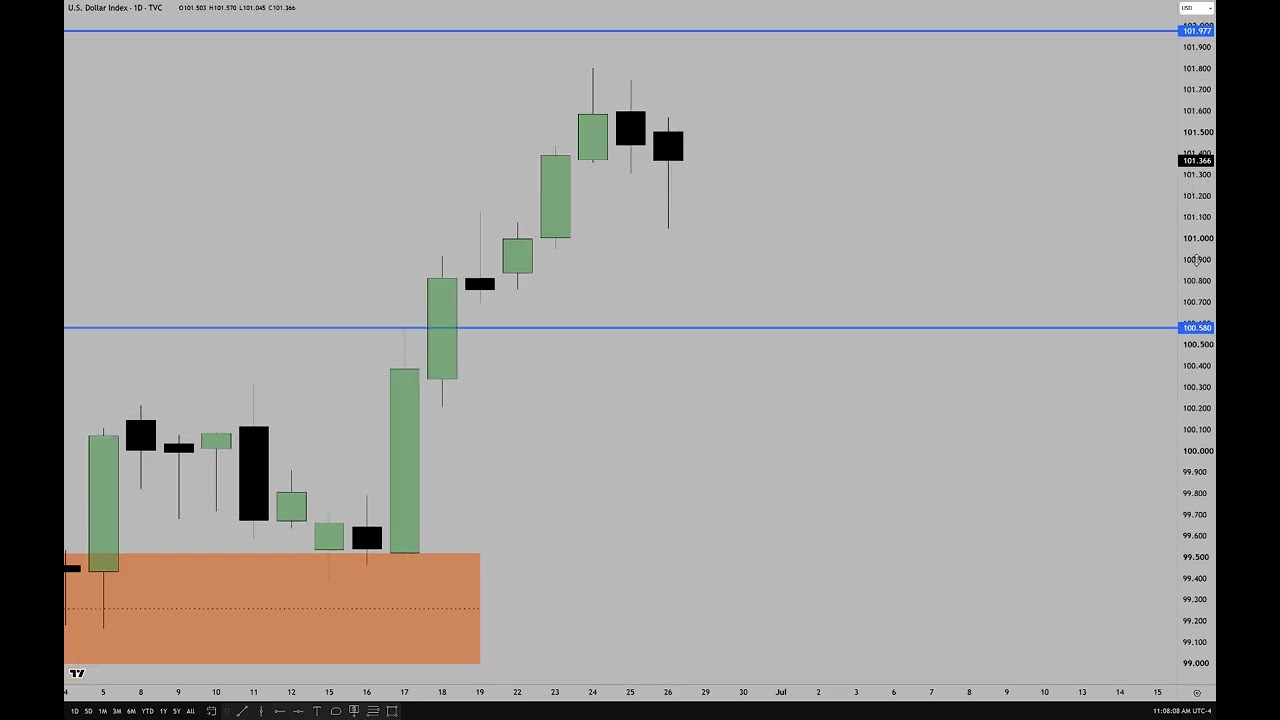
    – ICT reviews end-of-week price action and emphasizes a trading concept he calls “immediate rebalance” — a price delivery behavior (PD Array) he codified — which recently hit his target precisely on the dollar index and signaled directional moves.
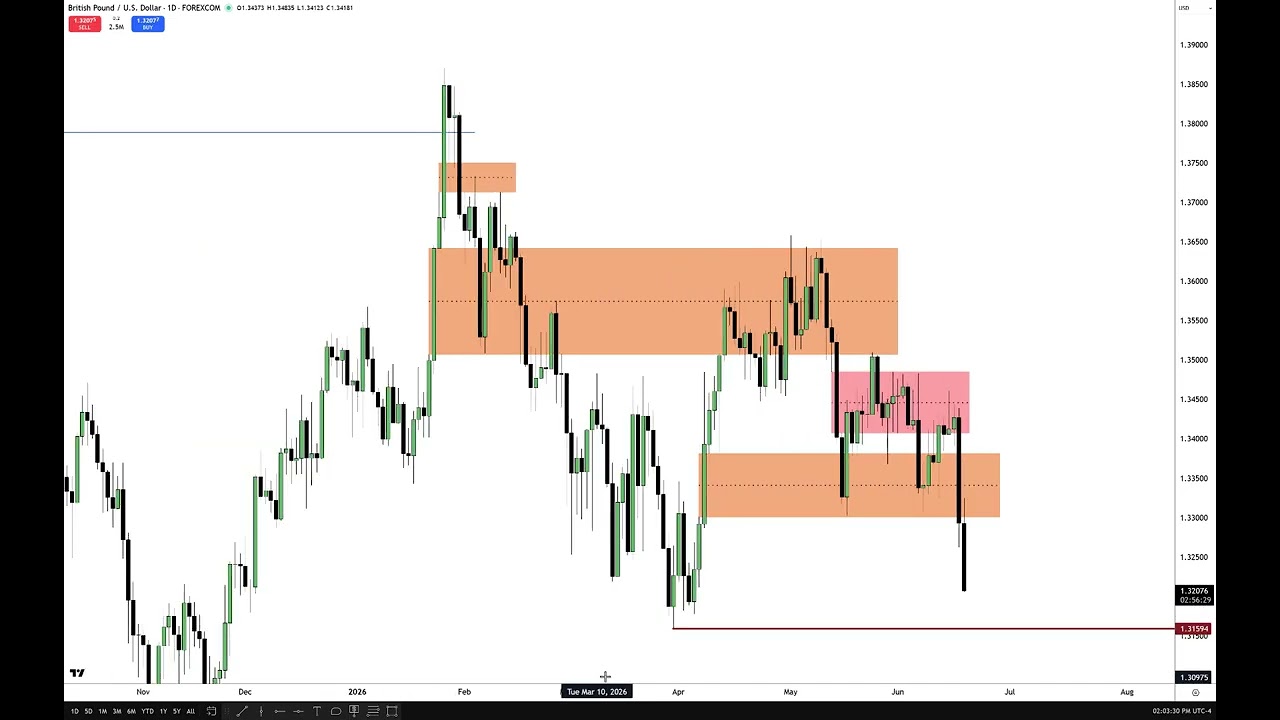
    – Dollar strength (immediate rebalance) translated into clear selling opportunities in dollar-quoted FX pairs (EUR/USD, GBP/USD, AUD/USD, etc.); EUR/USD and GBP/USD behaved largely as he expected.
    – Technical themes he repeatedly uses: fair value gaps, consequent encroachment (50% midpoint of wicks), rejection blocks, discount/ premium wicks, order blocks, volume imbalances, and gradient levels (quadrants/octants). These guide entries, targets and invalidation.
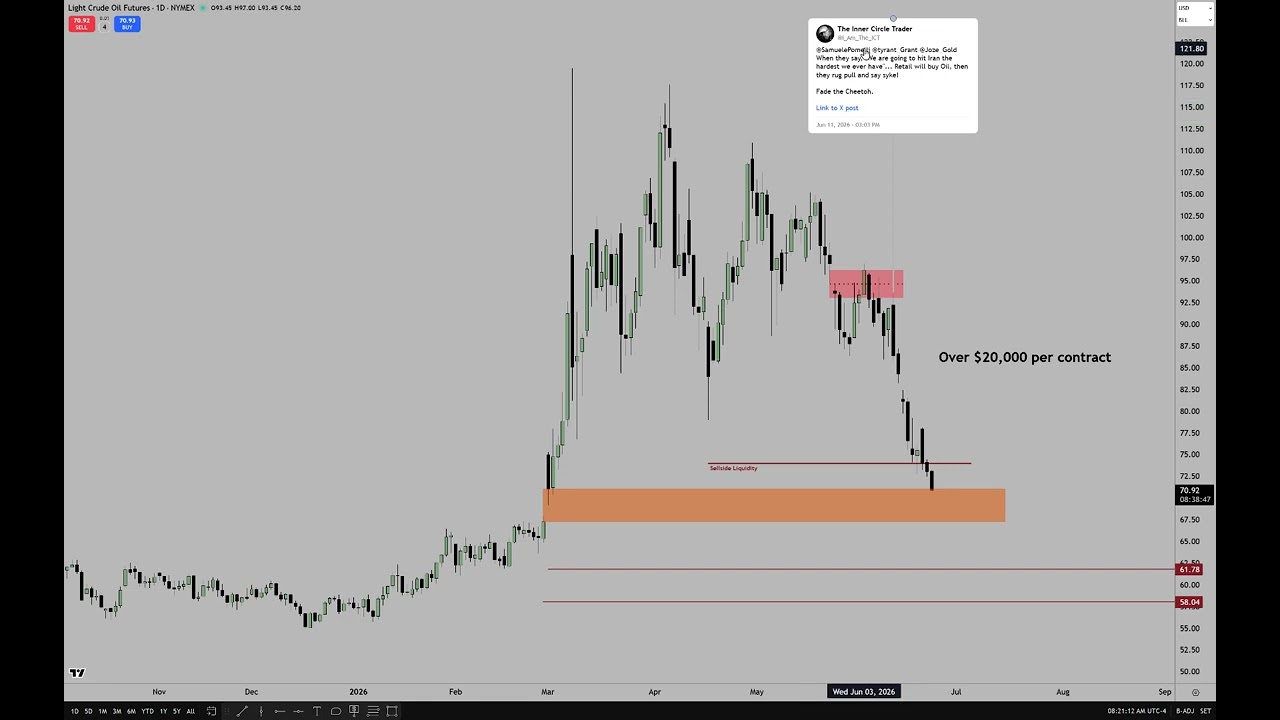
    – Commodities: crude needs a close above the wick midpoint to confirm a run higher; gold remains range-bound with possible lower pullback; silver he expects could be manipulated lower (cites historical precedent) and may fall quickly if key levels break.
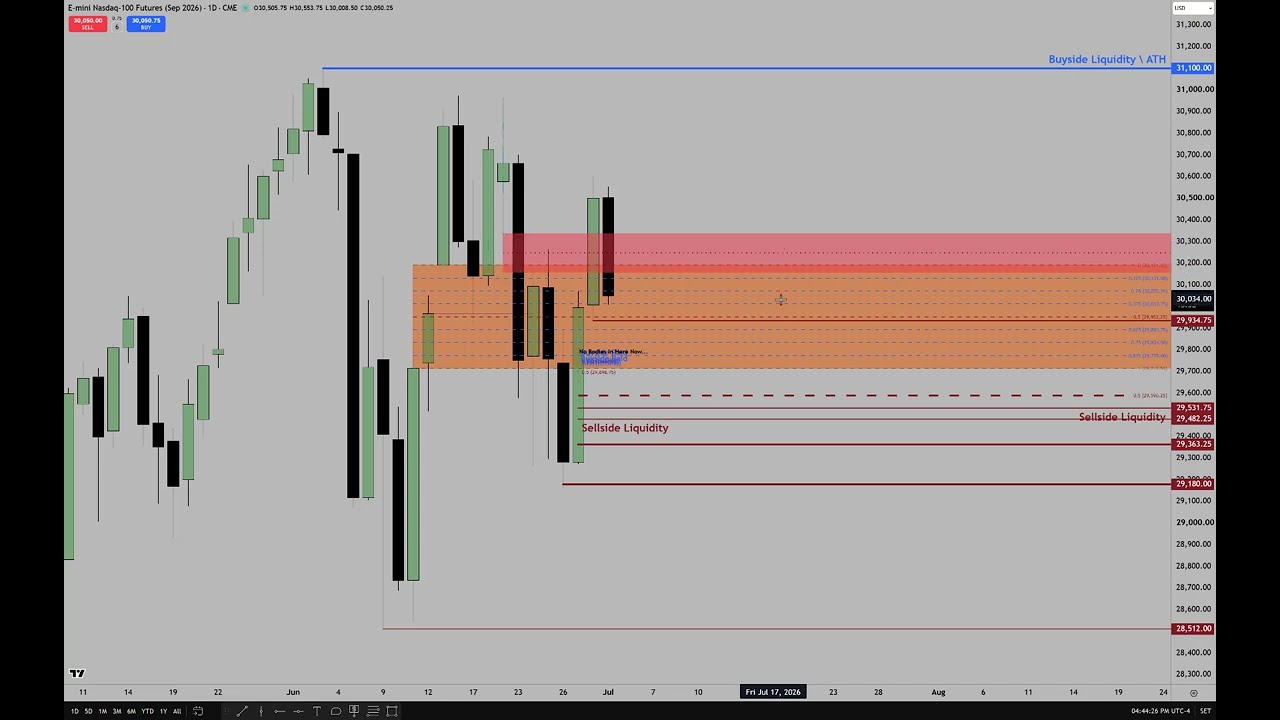
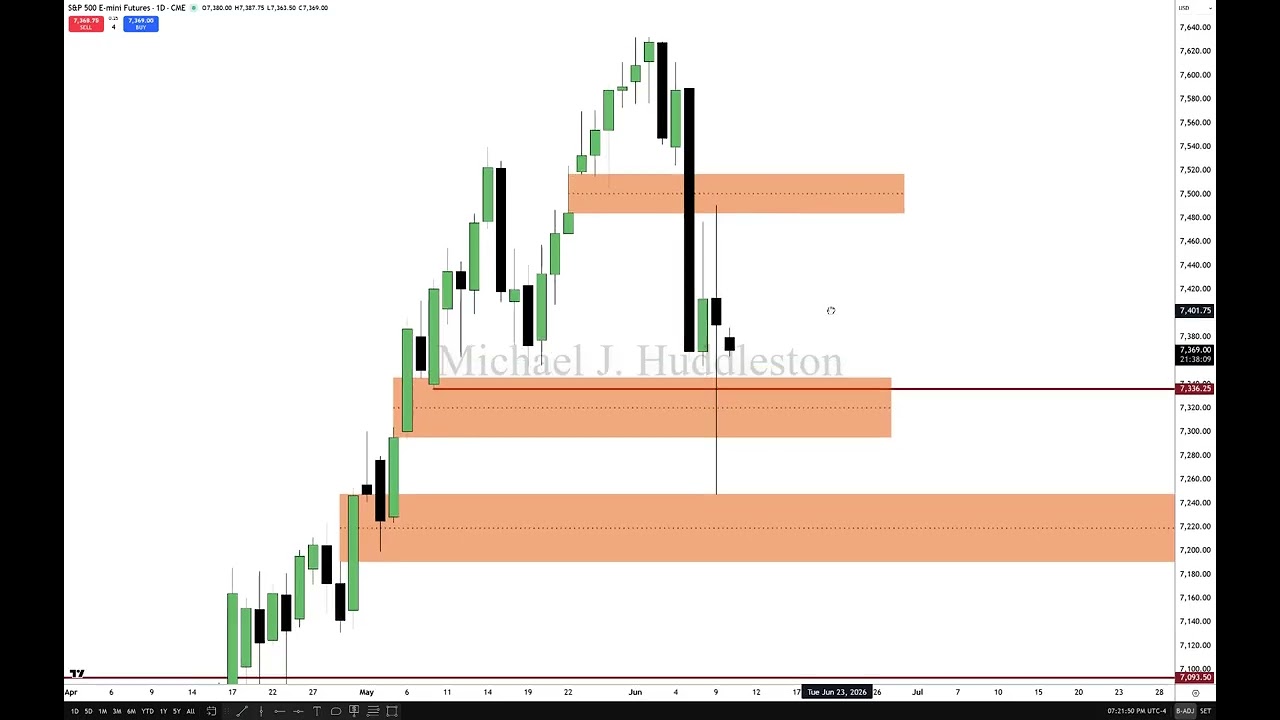
    – Equity futures (micro E-Mini S&P and micro Nasdaq): he anticipates a weak Sunday open (gap down) and continuation lower toward prior lows; recommends using micro contracts and paper/demo trading given current volatility.
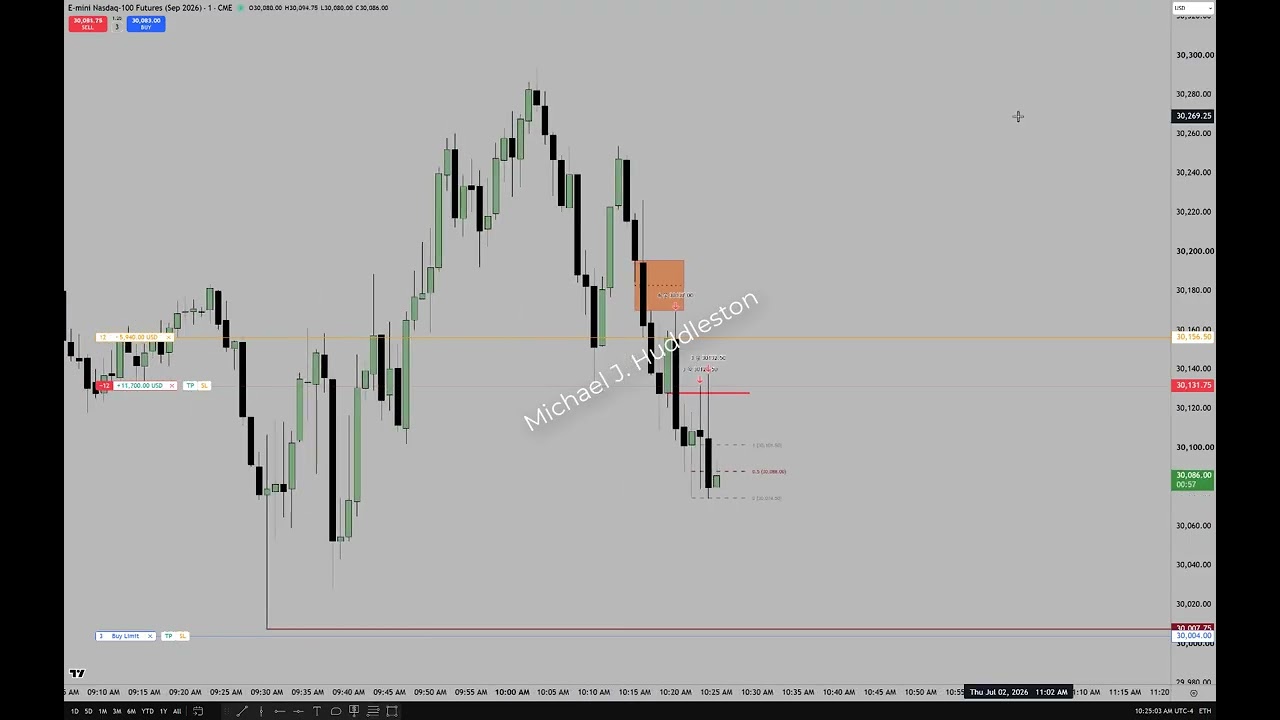
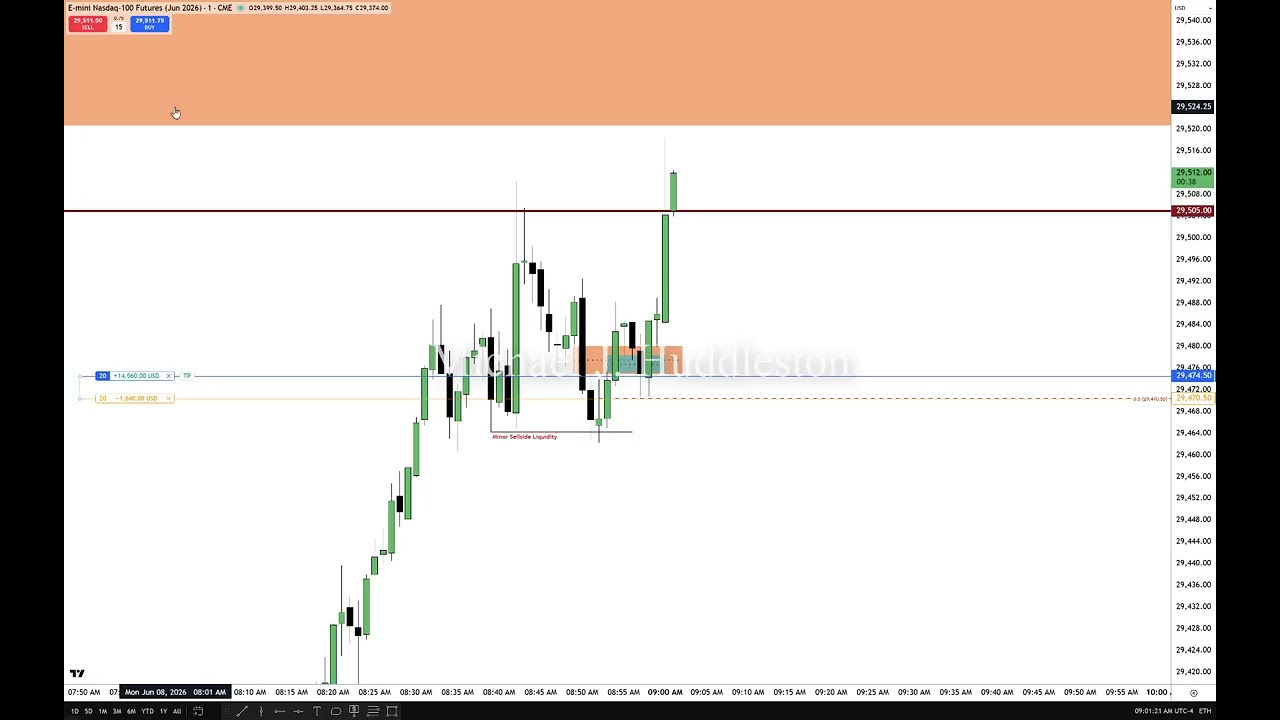
    – Trade example: he discussed a micro trade where market structure, fair value gaps and discount wicks informed entry/stop management; TradingView paper-trading glitches limited his ability to modify stops.
    – Practical advice and risk notes: use demo/micro to practice, don’t rush to trade live, be cautious over the weekend due to geopolitical risk, and allow trades room to breathe in volatile markets.
    – Mentorship/philosophy: he positions himself as a price-action teacher who shares concepts freely, defends his methodology against critics, stresses discipline and study, and encourages community learning rather than drama.

  • Trader Round Up – ICT Follow Through | March 11, 2026

    Summary — Trader Roundup session (Michael \”ICT\”, Kitt, students)

    – Core lesson: apply PD (premium/discount) arrays as a primary framework — order block → fair value gap → breakaway/measuring gaps — and treat suspension blocks like other inefficiencies (use upper half if bullish, lower if bearish).

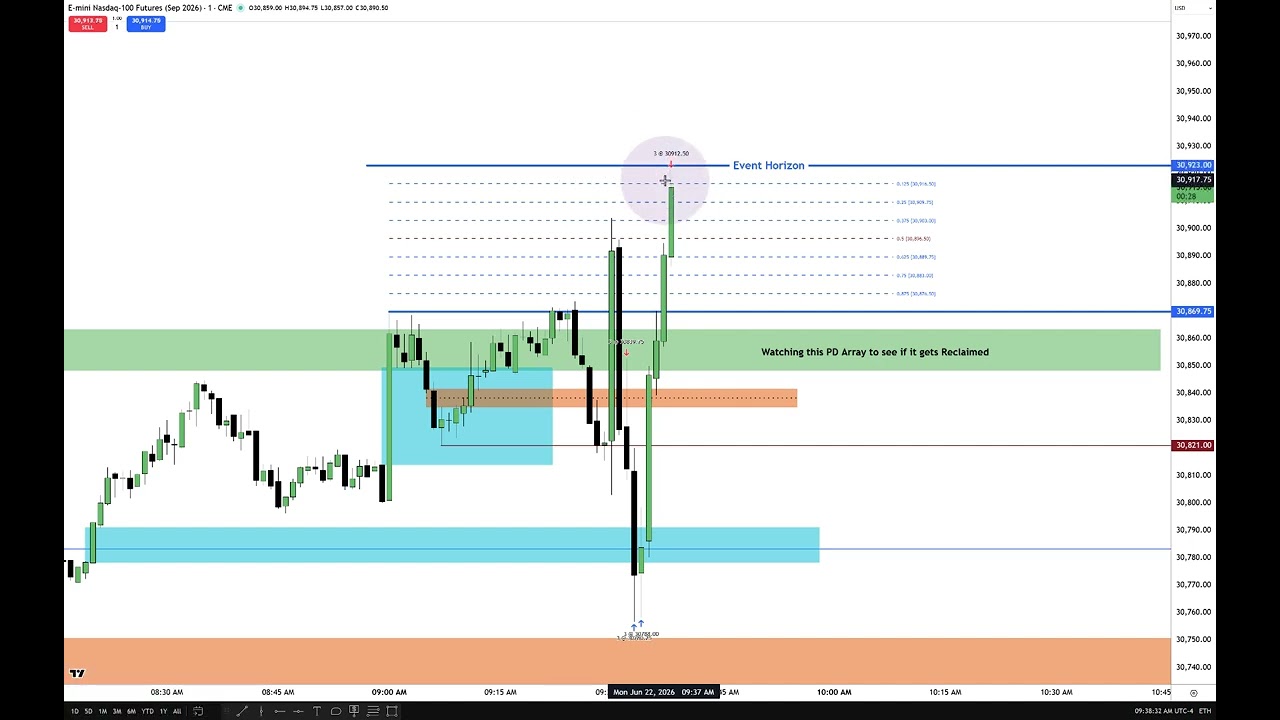
    – Nesting matters: when multiple PD elements (e.g., opening-range gap, new-week/day gaps, event horizons, order blocks) overlap, the area gains momentum/validity and often produces strong moves.

    – Priorities for levels: give priority to regular trading-hours opening-range gaps (they’re freshest). Use event horizons between any inefficiencies (including new-week/new-day gaps).\n- Timeframes & fractals: concepts are fractal. If order blocks are getting run through on a low timeframe, consider the same structure on a higher timeframe. Use quarters → eighths (and smaller subdivisions) to better visualize continuous order flow.

    Entries/exits:
    – Rejection blocks can be used for turtle-soup style entries (buy-stop above the opening price if the candlestick was breached).

    – Fair value gaps on low timeframes are permissible to trade; stop placement should follow the specific PD rules (e.g., wick/high + tick).

    Volatility & risk management (repeated emphasis):
    – Current global events have raised volatility (gold/silver/crude especially). Avoid trading high-volatility markets with real capital unless experienced and well-capitalized.
    – Use micro contracts, significantly lower leverage, and wider stops in this environment. If you take a loss for the day, stop trading — paper/demo trade instead.
    – Consider tools that lock you out after daily loss to enforce discipline.
    – Practical trading habits: tape-read and use the additional intra-quadrant lines for visual continuous order-flow reading; journal trades (Discord recommended).

    – Teaching/learning guidance:
    – Michael is sharing much material free; for a structured path, students recommended to prioritize 2022 mentorship / Core Content (especially months 4, 8 and 12): month 4 (PD arrays/order block theory), month 8 (when/not to trade, intraday protraction), month 12 (fractal application across OW/D/W/M).
    – For newcomers confused by newer content, stick to the 2022/core-content playlist first, then layer newer material.

    -Community notes: wide range of students (ages, professions, countries); emphasis on humility, entrepreneurship, and steady skill-building rather than chasing big, risky leverage.

    Overall tone: practical, risk-averse coaching focused on mastering PD-array order-flow concepts, using proper risk sizing (one-micro mindset), and studying core materials in sequence.

    Questions (test your knowledge)

    1) According to ICT, how should you treat a “suspension block” when using it on a chart?
    A. As a unique structure unrelated to other inefficiencies
    B. Like any other inefficiency (e.g., fair value gap or order block) — use the upper half if bullish and lower half if bearish
    C. Only as an entry signal for long trades
    D. Only as a stop-loss location for short trades

    2) ICT explains adding smaller levels (quarters, eighths, etc.) between larger quadrant lines primarily to:
    A. Make charts look more professional
    B. Force you to count candlestick buyers and sellers manually
    C. Give a closer, more detailed read of continuous order flow (visual representation of ongoing buying and selling)
    D. Replace the need to watch higher timeframe structure

    3) What does ICT say about “nesting” PD arrays (multiple PD structures overlapping in the same area)?
    A. Nesting makes the area irrelevant for trading
    B. Nesting decreases the predictive value of the levels
    C. Nesting significantly increases the strength/validity of the idea and you should anticipate strong movement/fireworks when price gets into that area
    D. Nesting indicates the market will always return to that zone repeatedly

    4) Regarding trading volatile instruments like gold, silver, and crude oil during elevated geopolitical volatility, ICT’s guidance is to:
    A. Increase leverage and trade more contracts to chase big moves
    B. Avoid deploying real capital — paper/demo‑trade or tape‑read instead; keep risk very small if you do touch them
    C. Only trade those markets at night
    D. Ignore volatility and use the same entries/stops as normal

    5) After taking a loss (especially in the current elevated volatility environment), ICT recommends:
    A. Immediately try to make the money back with larger size
    B. Double your position and re-enter the same trade idea
    C. Roll back leverage, trade one micro contract, stop for the day after a loss and spend time tape‑reading / practicing discipline
    D. Quit trading forever

    Answer key
    1 — B
    2 — C
    3 — C
    4 — B
    5 — C
    Evidence from the transcript (quotes + timestamps)

    1) Suspension block treated like other inefficiencies:
    – ICT: “suspension block. And it’s basically treated the same way as any old inefficiency, like a Sibi or a bisi. If it’s bullish, okay, you’re gonna use the upper half. Watch price respected. If it’s bearish, you’re gonna watch the lower half and, and it should respect it.\” [00:00:07–00:00:43]

    2) Purpose of adding smaller levels (quarters/eighths/etc.):
    – ICT: “If you want to have a better, closer read on continuous order flow… Having the smaller levels in between them, this gives you a greater detail for reading, continuous order flow. You don’t need to go on the candlesticks and look at numbers of how many people bought or sold. You’re getting a visual representation of ongoing buying and selling.” [00:02:46–00:03:29]

    3) Nesting PD arrays increases strength:
    – ICT: “Whenever you have nesting P.D arrays It provides significant increases in the strength or validity behind the ideas you are implementing… the more behind that idea and the grouping that P.D arrays show and shared in an area or arrange, once price gets in it anticipate a lot of fireworks.” [00:22:42–00:23:45]

    4) Advice on trading gold/silver/crude during elevated volatility:
    – ICT: “I have to be very, very careful in what I say about these types of markets. That’s why I backpedaled from silver and gold because I knew the volatility was gonna start hurting people… crude oil has entered that same realm… you can touch it if you want to, you can risk it, you can do all those things, but… I would not be touching it, especially if you’re not experienced well or well capitalized.” [00:11:11–00:13:04]
    – ICT later: “Paper trade them. Demo trade ’em, you know, where it can’t hurt you or tape read them… should we trade these markets? No.” [00:16:19–00:16:19 and 00:16:19–00:16:19 — context around 00:16:19–00:17:35]

    5) One micro, stop after a loss, tape‑read practice:
    – ICT: “One you should be doing one micro. We’re in some serious… Even if you’re trading a couple micros… my advice to you is, is when you take a loss, stop, go into just tape reading. That’s what you should be doing right now… if you take a loss for the day, no matter what size it is, this is the skillset that you’re gonna practice…” [00:34:05–00:37:27]”

  • TRU – POST ICT Livestream 3/10 | March 10, 2026

    Summary:

    In a live trading discussion, participants question confusing ES price action around 10:00 AM, fair value gap inversions, and whether a move was manipulation; Michael explains that manipulation can occur unexpectedly, so traders must use stop losses, avoid over-leverage, and treat invalidation as information to potentially reverse bias. He ties direction to higher-timeframe context, noting daily-chart relative equal highs and specific reference levels (e.g., February 4 and February 25 highs around 25,514.5) as likely buy-side targets amid heavy market manipulation and low excitement due to small opening-range disparity. The group discusses using PD arrays, opening range gaps, engulfment-retracement-inversion patterns, journaling, and disciplined execution, with reminders not to share specific trades. Additional Q&A covers order blocks (including consecutive candles), propulsion blocks, silver bullet usage, personal risk management statistics, and “Easter egg” study prompts, alongside recurring platform technical issues.


    Quiz (Answer Key below)

    Question 1

    According to ICT, what is the primary protection a trader should always use when entering a trade?

    A. Only trade during high-volume sessions
    B. Use a stop loss because manipulation can occur at any time
    C. Wait for confirmation from multiple indicators
    D. Only trade when the market has large opening gaps


    Question 2

    What condition did ICT say often leads to a 50/50 market environment at the start of the session?

    A. When overnight liquidity is very high
    B. When the market opens above the previous day’s high
    C. When there is no large opening range gap
    D. When price trades above the daily equilibrium


    Question 3

    Why did ICT believe the market had a higher probability of moving upward based on the daily chart?

    A. Because institutional buying volume increased
    B. Because the market returned inside a range after taking sellside liquidity
    C. Because the market opened above the weekly high
    D. Because momentum indicators were oversold


    Question 4

    According to ICT, if a trade setup fails and price does not move in the expected direction, what should traders consider?

    A. Close the platform and wait until tomorrow
    B. Add more leverage to the position
    C. Consider that price may move in the opposite direction and use prior imbalances as support/resistance
    D. Ignore the signal and wait for news events


    Question 5

    What did ICT say traders should do if they cannot tolerate drawdown through several PD arrays?

    A. Use longer-term timeframes
    B. Increase position size
    C. Avoid trading during New York session
    D. Reduce leverage because they are over-leveraged


    Question 6

    When does a down-close candle become a bullish order block, according to ICT?

    A. When price closes above the candle
    B. When price trades one tick above the candle’s opening price
    C. When the candle forms during the London session
    D. When the candle has a large wick


    Answer Key (with Evidence)

    1. B — Use a stop loss because manipulation can occur anytime

    Evidence:
    “if we’re gonna be buying or selling, we have to use a stop loss… manipulation could come in… you getting wrecked and there’s nothing you could have done to prevent it except… have a stop loss.”
    (00:02:22–00:02:58)


    2. C — When there is no large opening range gap

    Evidence:
    “the first indication was it was 50-50 going in ’cause of the lack of a large enough opening range gap.”
    (00:04:21–00:04:29)


    3. B — Because the market returned inside a range after taking sellside liquidity

    Evidence:
    “we traded down to the sellside yesterday… then it came right back up inside the range… the market’s probably gonna try to gravitate towards [equal highs].”
    (00:08:30–00:08:56)


    4. C — Consider the opposite direction and use prior imbalances

    Evidence:
    “if it’s not selling off when it should be selling off, then it’s probably gonna go the other direction… treat them as footholds… it’s gonna be like a springboard.”
    (00:35:00–00:35:35)


    5. D — Reduce leverage because they are over-leveraged

    Evidence:
    “if you can’t absorb retracement… up to three PD arrays… you’re over leveraged.”
    (00:36:40–00:36:59)


    6. B — When price trades one tick above the candle’s opening price

    Evidence:
    “when we see price trade above the opening price of a down close candle… that immediately activates that down close candle… you just need to see it trade above it.”
    (00:41:32–00:43:08)

  • Trader Round Up – ICT Follow Through 3/9 | March 09, 2026

    Summary:

    In a Trader Roundup live discussion hosted by Kitt with ICT (Michael), participants review a lecture and share takeaways about allowing small candle bodies to slightly exceed fair value gap boundaries in volatile markets, emphasizing risk control and that not everyone is suited to trading. Michael explains that key levels require alignment of time, price, and gradient levels derived from dynamic five-day ranges of opening gaps or other ranges, framing premium/discount for targets and setups. A trader asks how to choose among many sub-minute PD arrays; Michael says PD arrays are validated when they form over gradient levels at the right times. Others discuss learning via ICT’s X/Twitter spaces, note-taking, journaling (including using Notion and ChatGPT), scaling position size via pyramiding, displacement, event horizon partial exits, and using premarket liquidity. A brief religious question arises, and Michael reiterates focusing on process, patience, and delayed gratification.

    QUIZ:

    Test your knowledge (click each question to reveal the answer)

    According to ICT, why might small candle bodies slightly outside a Fair Value Gap sometimes be ignored?
    a) They always invalidate the setup
    b) They represent strong institutional activity
    c) They are insignificant price action and can be disregarded
    d) They confirm that the market is reversing

    Answer: c) They are insignificant price action and can be disregarded.

    Evidence (00:11:30–00:11:55): ICT explains that small deviations outside the level may not matter:
    “That small little segment of price action that still by definition is the body… what type of body is it, it’s an insignificant amount of price action. So to me, I disregard that.”

    What condition must be present for a Fair Value Gap or PD Array to become a valid “key level” according to ICT?
    a) It must occur during high volume
    b) It must align with a gradient level and time
    c) It must appear on a daily chart
    d) It must close completely before trading

    Answer: b) It must align with a gradient level and time.

    Evidence (00:14:50–00:16:05): ICT states that the key factor is alignment with gradient levels:
    “Every one of those ranges has a gradient level, and when it agrees with a P.D array… now you have a key level. It’s not a key level unless that criteria is there.”

    In ICT’s explanation of algorithmic market behavior, what role do gradient levels serve?
    a) They determine trading volume
    b) They function like yard lines marking where price interacts
    c) They identify market news events
    d) They replace Fair Value Gaps

    Answer: b) They function like yard lines marking where price interacts.

    Evidence (00:21:20–00:22:05): ICT compares gradient levels to football field yard lines:
    “The P.D array that lays down on top, that yard line, which is the gradient level… when it’s the right time to make the play.”

    According to ICT, why do many Fair Value Gaps fail to produce trades?
    a) Because they are too small
    b) Because traders enter too early
    c) Because they are not aligned with gradient levels
    d) Because they occur during low liquidity

    Answer: c) Because they are not aligned with gradient levels.

    Evidence (00:22:10–00:23:10): ICT explains that most gaps are ignored by the algorithm:
    “Just because you see a fair value gap means nothing. It has to lay over top of a gradient level at a right time… that’s what validates the fair value gaps.”

    What does ICT say happens if price trades outside the defined range created by recent opening gaps?
    a) Traders should double their position
    b) Traders should immediately reverse their trade
    c) Traders should stop trading and wait for a new range
    d) Traders should switch timeframes

    Answer: c) Traders should stop trading and wait for a new range.

    Evidence (00:14:05–00:14:35): ICT explains how to respond when price leaves the defined range:
    “What happens if it trades below that? You’re gonna sit on your hands… when a new day opening gap comes in… now you can trade, but you have a range to work within.”

  • Trader Round Up – ICT follow through | March 08, 2026

    Summary:

    In a live trading Twitter/X space, host Kitt moderates a discussion with Michael Huddleston (ICT) and global participants, stressing adherence to a speaker “process” and keeping commentary focused on markets rather than geopolitics. Traders share takeaways from ICT’s weekly review, including relative strength/SMT analysis on indices using line charts, expectations around gaps (indices gap down, metals/oil move), and assignment research (Hunt Brothers). Several off-topic or unprepared speakers are cut short, while others ask about fair value gap fills, macro timing precision (e.g., 10:50–11:10), managing opening-range/RTH gap levels (keep last five in rotation), and CFD vs futures. The group emphasizes journaling to reveal psychological errors and recommends healing fear by stepping back to tape-reading and demo. ICT proposes a four-week “one micro” challenge to earn about $1,000 to cover key bills, focusing on discipline, small risk, and scalability.

    Quiz:

    How well were you listening? Test your knowledge

    According to ICT, what is the most important central factor that drives how and why prices move?
    a) Volume
    b) Indicators
    c) Time
    d) News events

    Answer: c) Time
    Evidence (00:51:10): “The most important central tenant to how and why prices move… it’s time.”

    How many opening ranges does ICT recommend keeping on the chart as a general rule of thumb when analyzing price?
    a) 3
    b) 5
    c) 10
    d) 20

    Answer: b) 5
    Evidence (00:37:55): “I gave, as a general rule of thumb, keep five on there.”

    When mapping multiple opening ranges, what does ICT suggest using to define the complete price range or grid?
    a) The most recent opening range only
    b) The highest high and lowest low of the last five opening ranges
    c) The daily open and close
    d) The weekly high and low

    Answer: b) The highest high and lowest low of the last five opening ranges
    Evidence (00:38:00 – 00:40:00): ICT explains using “the highest high of that range and the lowest low of the five” to create a complete range or grid.

    What does ICT say macro time windows are primarily used for in trading?
    a) Determining stop-loss levels
    b) Predicting news releases
    c) Focusing attention on when price moves tend to start or end
    d) Identifying market manipulation

    Answer: c) Focusing attention on when price moves tend to start or end
    Evidence (00:42:00): “The macro is not the answer to everything. It’s a timing mechanism… a window of time where things tend to happen.”

    In ICT methodology, what is the purpose of identifying liquidity in the market?
    a. To determine broker spreads
    b. To find price levels the market may target next
    c. To calculate lot size
    d. To determine leverage

    Answer: b. To find price levels the market may target next

    Timestamp: 00:40:26
    Text: “It’s gonna reach for a pool of liquidity that’s within striking distance…”

    What concept helps traders determine whether price is relatively “cheap” or “expensive” within a range?
    a. Market profile
    b. Premium and Discount
    c. Fibonacci expansion
    d. VWAP

    Answer: b. Premium and Discount

    Timestamp: 00:40:14
    Text: “Assuming that we’re in the lower 100 handles of that 350, are we in a discount or a premium relative to that?”

    When analyzing a trading range, what additional factor does ICT say traders should combine with price location?
    a. Volume indicators
    b. Fibonacci levels
    c. Time aspect
    d. RSI divergence

    Answer: c. Time aspect

    Timestamp: ~00:39–00:40 discussion
    Text: “Where are you at with market price? Then add the time aspect to it and you’ll be able to see where you’re at in that range.”

    Which price imbalance concept is mentioned as a possible continuation entry signal?
    a. Breaker Block
    b. Fair Value Gap
    c. Volume Gap
    d. Stop Cluster

    Answer: b. Fair Value Gap

    Timestamp: 00:43:00
    Text: “I’ll just look for a continuation institutional order flow entry drill, or another fair value gap.”

    Which ICT concept is referenced as a way to study how institutional price movements originate?
    a. Breaker theory
    b. Liquidity sweep model
    c. Order Block projection theory
    d. Volume imbalance model

    Answer: c. Order Block projection theory

    Timestamp: 00:32:29
    Text: “Order block projection theory, very clearly articulated by Michael…”

  • Feburary 13, 2026 | Trader Round Up – It’s Friday

    Summary:

    A live conversation where speakers discuss concerns about food and health, claiming “fake meat” is being pushed while alleging mRNA is being injected into meat and that cancer “cures” will be delivered by syringe. One speaker recommends halal meat for cleanliness but says it would not remove mRNA, describes being “pure blood,” and recounts a childhood vaccination event involving his youngest child’s blood pressure crash and later learning differences. He criticizes chemotherapy as ineffective, suggests nutrition changes (especially removing carbs and sugar) could have helped his grandfather with pancreatic cancer, and mentions fenbendazole and ivermectin as potential aids.

    The group emphasizes buying food directly from farms, promoting paleo-ketogenic, high-fat/high-protein diets (raw butter, organ meats), and avoiding processed foods; they cite widespread antibiotic use in livestock and contamination of grains/beans with pesticides and glyphosate, and discuss fluoride, aluminum, and geoengineering as harmful.

    The conversation shifts to politics and conspiracy topics, including Epstein-related documents, allegations of “disclosure, missing government trillions, and claims of a “Luciferian” power structure. Speakers speculate about engineered civil unrest (“zombie apocalypse” as code), false-flag events, depopulation, and government preparation (food storage, officials’ security measures). They argue the system is designed to push people toward snapping while remaining comfortable enough not to act.

    Later, they return to personal health practices: elimination diets, cutting sugar and bread, improved resting heart rate and blood pressure, and discussion of parasites and turmeric for inflammation.

    A major emotional segment features a participant thanking Michael for his “Berean Study” YouTube channel, describing how it led him to church and baptism in Jesus Christ’s name, and sharing that the experience felt more liberating than money or trading success. Michael responds that the testimony answers his doubts about reaching people, says he would rather focus on Bible teaching than trading, and gives advice on faith: read the Bible (he mentions reading it through with Alexander Scorby), talk to God openly, place God above all else, and live with daily gratitude and praise. Other participants affirm the impact of Michael’s beliefs and teaching across different religious backgrounds.

  • 2025 Storytellers Series – NQ Futures June 05, 2025

    2025 Storytellers Series – NQ Futures June 05, 2025

    https://www.youtube.com/watch?v=38-431ysWik

    – This is the Storyteller review for the June 5, 2025 NASDAQ futures contract, building on the June 4 video where key levels were posted.
    – ICT focused on a single concept: the daily “SIBI” (daily inefficiency / fair-value gap) and its graded levels (upper quadrant, consequent encroachment, lower quadrant, and low). Higher-timeframe inefficiencies are treated as real support/resistance.
    – Because it’s non-farm-payroll week, price was choppy and rangebound (especially Wed–Thu). New traders were advised to stop trading by about 7:00 AM ET ahead of the Friday release to avoid being caught in volatile, whipsaw action.
    – The intraday analysis used only the 1-minute chart and the daily inefficiency levels — no opening-range gaps, opening-gap tools, or new fair-value-gap techniques were used that day.
    – Practical trade notes: the presenter shorted near the London high into liquidity, watched price interact with the daily cibby levels (lower quadrant, order blocks, inversion fair-value gaps), took stops, and then followed further short/long opportunities as price cycled through those levels. The action showed classic NFP-week stop-hunts, liquidity grabs, and consolidations.
    – Main takeaway: knowing and trading around higher-timeframe inefficiencies within the context of the economic calendar simplifies entries and management; once price leaves the daily cibby, other reference points must be used. Study the one-minute chart and the prior video for details.

  • 2025 Storytellers Series – Dollar & EurUsd June 05, 2025

    2025 Storytellers Series – Dollar & EurUsd June 05, 2025

    https://www.youtube.com/watch?v=08d62cZDXUk

    – Context: Storytellers Series (episode 3), June 5, 2025 — focused on the dollar index and EUR/USD (not covering other FX pairs). The presenter is not actively trading Forex and treats it separately from his index-futures work.

    – Big-picture view: Global trade friction, tariffs and geopolitical risk are creating chaotic fundamentals. The presenter believes this environment is broadly negative for the U.S. dollar and that a softer dollar (higher EUR/USD) is the more likely outcome.

    – Market stance: Not bullish on the dollar index; expects lower dollar levels over time unless major geopolitical tensions unexpectedly resolve. He sees the broader market as risk-on (stocks can still rally), which supports a weaker dollar.

    – Technical approach: Analysis relies on technical constructs across timeframes—weekly, daily, hourly, 15-min, and 5-min—using concepts like fair value gaps, inversions, buy/sell-side efficiency, liquidity pools and order blocks. Key higher-timeframe sell-side liquidity and inversion gaps are focal points for downside targets.

    – Near-term triggers and risks: Employment and upcoming nonfarm payroll (NFP) data can change the picture; recent employment data caused short-term moves. Heavy manipulation and wide, unpredictable ranges are possible, making FX trading riskier now.

    – Practical cautions: He warns inexperienced or undercapitalized traders not to over-leverage or trade impulsively—profitability is difficult in the current FX climate. This commentary is opinion, not trading advice.

    – Frequency: He plans to post daily-ish EUR/USD and dollar-index updates when relevant, but remains cautious and will keep precise trade-levels private until warranted.