
Author: Summarizer

  • ICT Forex Lesson – EurUsd NYO Lecture

    ICT Forex Lesson – EurUsd NYO Lecture

    https://www.youtube.com/watch?v=RRiqh-8gWqA

    Summary:

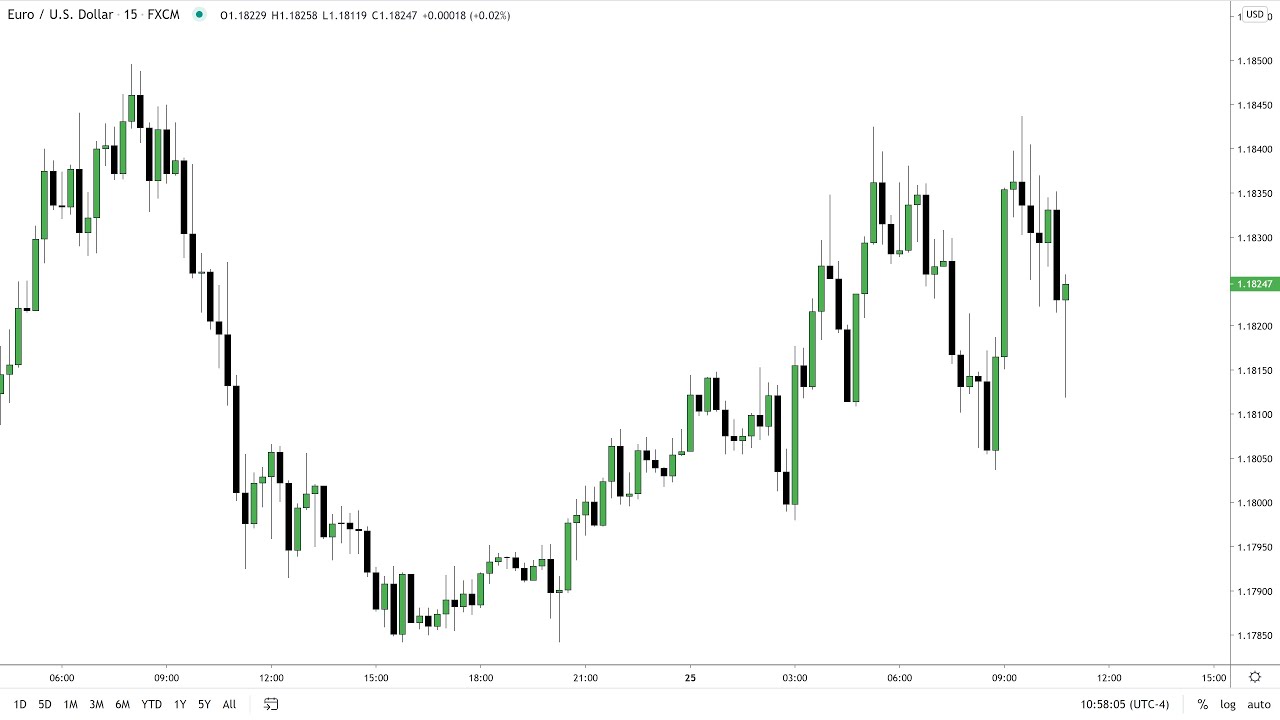
    – Video analyzes EUR/USD on the 15‑minute chart and previews a deeper lesson in the mentorship midweek review; updates and the naked chart are posted on the channel’s Community tab (use the notification bell).
    – Instruction to set charts to New York time (vertical day start at midnight NY) so lesson timing (New York session 8:30–11:00) aligns for all viewers.
    – Market context: consolidation/range after Monday’s high, with multiple equal lows/highs—trade the range until a clear displacement occurs rather than chasing breakouts.
    – Key concepts used: order blocks (bearish and bullish), mean threshold (mid‑body), mitigation blocks, buy/sell‑side liquidity and “judas” swings. The trader emphasizes trading price logic/algorithmic repricing to order blocks rather than relying on FIBs.
    – Trade recap (5‑min detail): went short into a bearish order block at the last up‑close candle after a failed retest of the swing high; targeted sell‑side liquidity below recent lows. Scaled off ~80% of the position when a short‑term high was taken out and trailed the remainder to ~1.1820.
    – Outlook: still favors a run toward prior equal highs and the 1.1850 area for liquidity. Emphasis on starting small, managing risk, and not letting money size drive poor decisions.
  • ICT Mentorship – Learn How To Read Forex Price Action

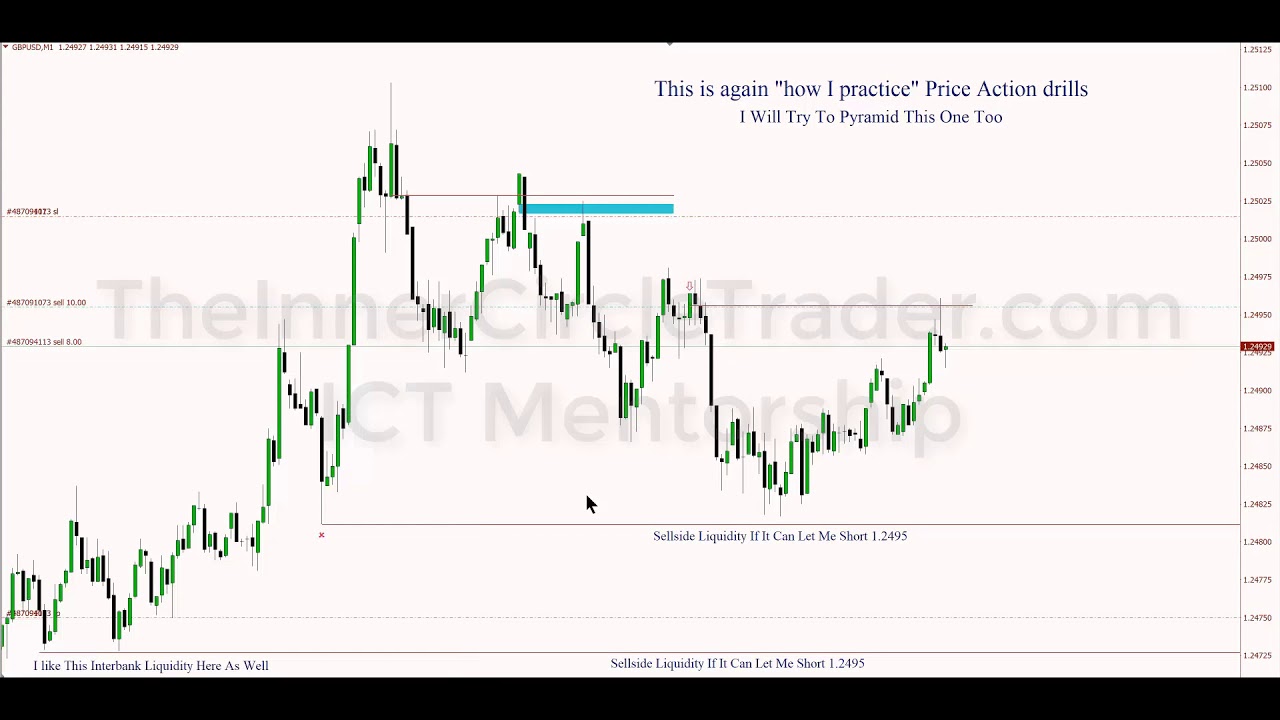
    ICT Mentorship – Learn How To Read Forex Price Action

    The text is essentially a series of repeated music cues (“[Music]”) with no lyrics or descriptive content, except for a single occurrence of the word “you.” In short: it’s primarily repetitive musical content with one spoken word.

  • ICT Precision Trading Concepts – 3

    ICT Precision Trading Concepts – 3

    https://www.youtube.com/watch?v=nMmihrR-0Q0

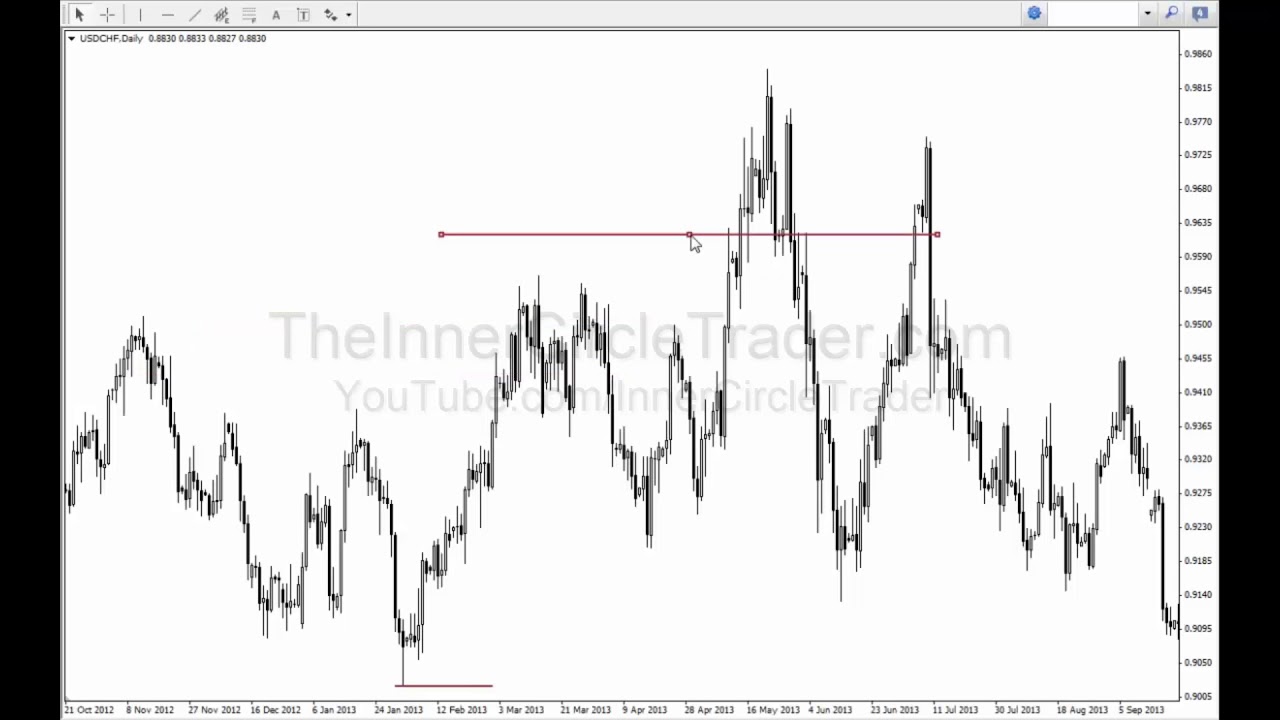
    – Concept: “L7” or “inside the range” trading — a simple framework for trading within predefined price ranges rather than always needing a directional bias.
    – Core premise: markets spend roughly 70% of the time in ranges. If you know the current range high and low, you can trade short-term reversals and counter-swings with favorable odds.
    – Tools/markers: identify range highs/lows, nested (fractal) ranges, and institutional order blocks (bullish/bearish supply–demand zones). Watch for liquidity sweeps and retests of those order blocks.
    – Execution: prefer taking trades at the extremes of the active range (sell near range highs into bearish order blocks, buy near range lows into bullish order blocks). Avoid buying into a bearish order block at the far extreme of a range on higher timeframes.
    – Risk management: trade short-term (intraday or swings), don’t overstay positions, and use partial profit-taking (example: take ~80% off at a logical resistance and leave ~20% to capture a possible continuation).
    – Practical notes: expect some failures—not every setup wins. Use Fibonacci, patterns, and confluence to refine entries. The Swissy (USD/CHF) was used as an example because of its volatility and frequent range behavior.
    – Benefit: more trading opportunities and consistent small wins without relying on a long-term directional premise, provided you are disciplined and systematic.
    – Study recommendation: spend time mapping highs, lows, and order blocks across your preferred pairs to find repeatable range setups.