
https://www.youtube.com/watch?v=rtIcbG6twrI
– Context: The host and Caleb review the coming week’s schedule—major CPI and PPI releases and Fed speeches on Tuesday and Wednesday—so expect heavy morning volatility those days. They prefer trading PM sessions after the initial noise settles.
– Monday outlook: No scheduled news today, so price could be quiet or build into the bigger Tuesday/Wednesday moves. The speaker is approaching Monday with a clean slate and caution rather than a fixed bias.
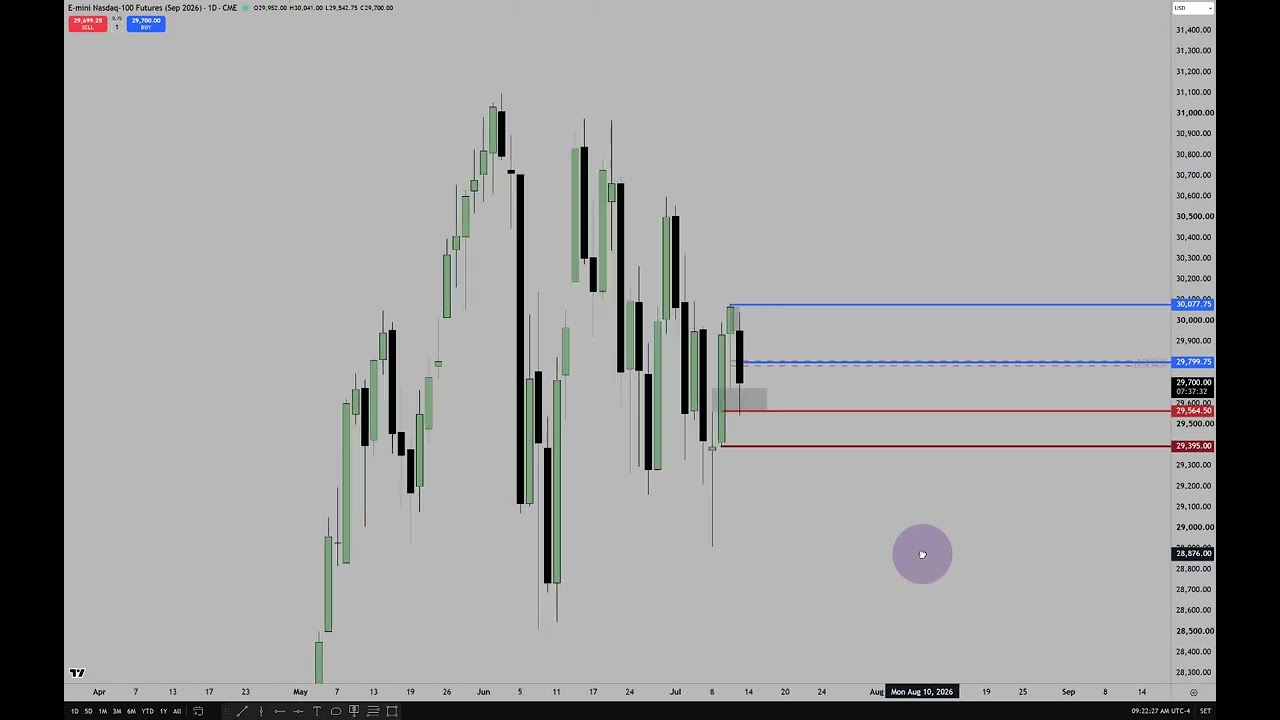
– Chart read (high level): Price is inside a large range with a daily wick/volume imbalance at the lows and a notable weekend/opening gap. Gaps and inefficiencies (fair value gaps) are key levels; regular trading hours carry more weight than overnight/electronic prints.
– Intraday plan: Monitor 15-minute and 1-minute structure, use the opening-range gap midpoint and order blocks as primary levels. Probe with a single contract to test liquidity and reaction, manage risk with tight stops (below encroachment/imbalance levels), and look to reverse into longs if probes fail to push lower.
– Execution details: Focus on candle bodies (not just wicks) to confirm moves, limit activity during the high-volatility opening minutes, and avoid trading large size in demo-like behavior. Paper trading is used for compliance/demonstration.
– Risk & discipline advice: Have a model and reasons for each trade; responsibility for outcomes is always the trader’s. Novices should generally avoid trading Mondays (except NFP Mondays). Preserve capital, avoid chasing trades, and don’t overtrade to prove competence.
– Meta points: The market’s structure and price-action concepts (gaps, order blocks, fair value gaps) underpin the approach; many others and AI tools have begun echoing this terminology. The speaker emphasizes experience, manual verification over blind automation, and skepticism of flashy mentors.
Leave a Reply