
https://www.youtube.com/watch?v=C7CwjBOtHwM
Summary:
The speaker explains how he derived key price levels and why he trusted certain setups, emphasizing session structure, liquidity, and the economic calendar. With CPI (Wed) and PPI (Thu) coming, he expects muted, range-bound regular trading on Mon–Tue and larger, one-sided moves midweek. Electronic/pre-market hours (London, overnight) are more likely to trend when big data is scheduled later in the week.
Key points and rules he uses:
– Anchor Fibonacci and grading to session extremes (highest high / lowest low) to find meaningful quadrants (e.g., the 0.75 lower quadrant).
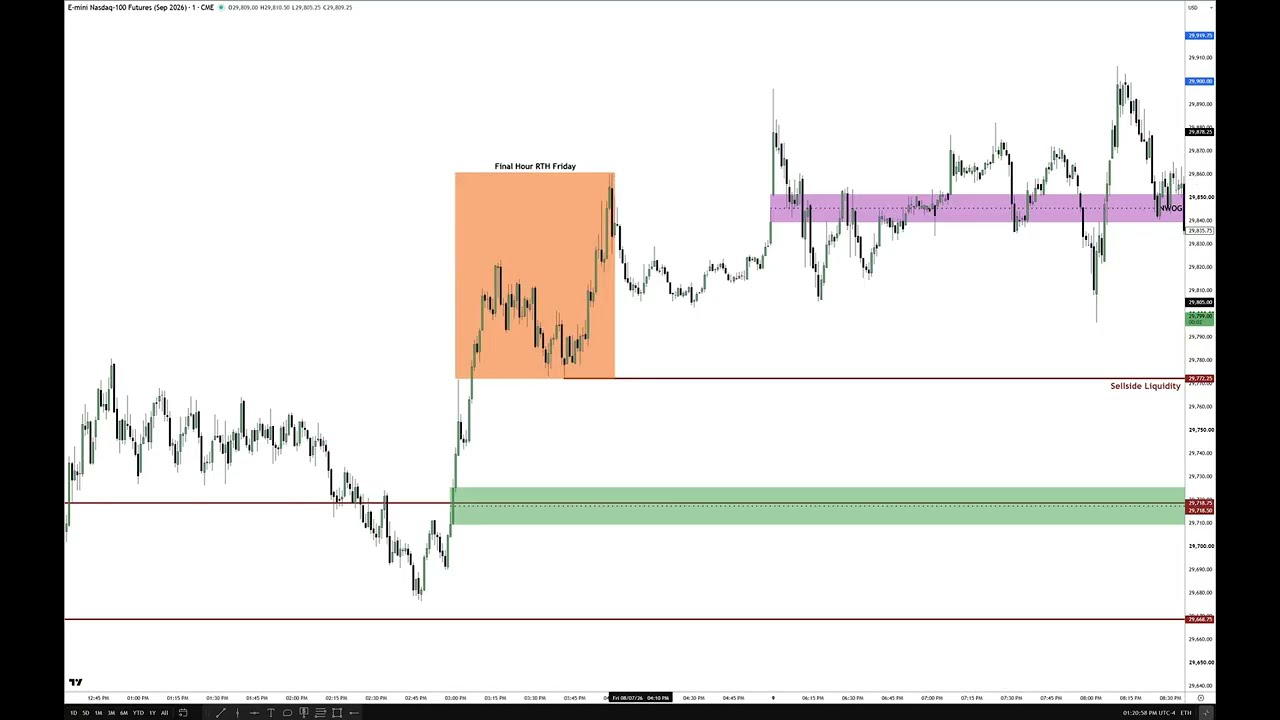
– Use the final RTH (regular trading hours) Friday low and the new-week opening gap as important liquidity reference points.
– Treat the first 30 minutes of the pre-market as the “dealing”/opening range for that session (similar to 9:30–10:00 RTH); grade levels from that range.
– Midnight opening price is a key magnet; mark it on charts regardless of instrument.
– Carry session ranges, octant/quadrant levels, and fair-value/inefficiency gaps forward as targets or rejection zones (inversion fair-value gaps can act as resistance/support).
– Expect electronic sessions to trend more; expect RTH to be more range-bound ahead of major macro prints.
– Don’t force trades; practice on demo/backtests—real money exposes tendency to force trades and requires discipline.
– Trade management: accept stops, use partial exits, and learn to secure unrealized gains; trades won’t always be perfect.
He reiterates his teaching order and content is posted for self-study and encourages viewers to review past videos before asking repetitive questions.
Leave a Reply