Tag: ict

  • The Inner Circle Trader’s Space 10:41PM | February 13, 2026

    Summary:

    – A trader asked about using volume imbalances as profit targets and whether wicks that touch an imbalance invalidate it. Michael’s answer:
    – You can use the imbalance as a take-profit target, but be pragmatic — it’s fine to exit slightly before the level rather than waiting for a perfect hit. Trust your trade decision-making while you build the skill to hold for fuller moves.
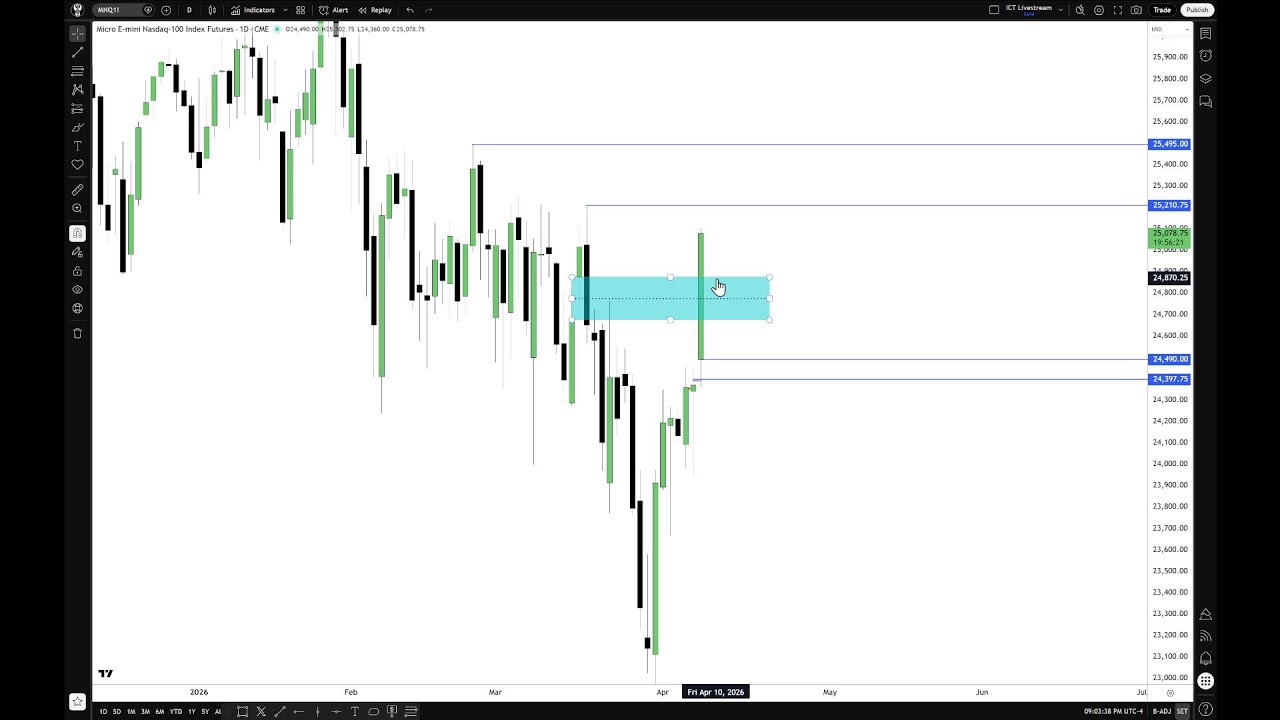
    – Volume imbalances are flexible and can be traded multiple times because they are essentially common gaps with wicks passing through them. They do not become invalid simply because price wicks through.
    – An imbalance becomes effectively “invalid” for trading (entries, targets, stops) only when a full candle body closes over it on the same timeframe it formed (e.g., a weekly imbalance needs a weekly body close to be considered closed). If a substantial portion of a body lies inside the imbalance, Michael will stop using it and look for other PDAs.
    – By contrast, inversion fair value gaps have much stricter criteria and cannot be treated as flexibly.
    – Carry levels down to lower timeframes for use, but judge validity based on the timeframe of formation.

    – A second caller (Daniel) asked about trading psychology:
    – He has no trouble with technicals but struggles with overconfidence after winning streaks, which leads him to stop respecting risk and eventually suffer losses.

    – Key practical points: be flexible with volume imbalances, don’t insist on perfect exits, trust and train your decision-making, and stop using a PDA once its forming-timeframe candle body closes over it.

  • The Inner Circle Trader’s Space 10:55PM (NOT RECORDED) | February 13, 2026

    Summary:

    Trading psychology & tactics
    – Overconfidence after a winning streak (“Midas touch”) leads traders to over‑leverage and then panic when a loss comes. ICT stresses managing that impulse.
    – Practical rule: build plateaus — after a series of winning trades (example: five), scale back to the smallest size (one micro) rather than continually increasing risk. This limits drawdowns and emotional damage.
    – Income‑based trading: focus on steady, modest targets rather than chasing huge payouts. Example math: on a $5k base, aiming 7–12% weekly is realistic; one micro contract (≈$2/handle) can hit a daily/week target (e.g., ~37.5 handles per session) without excessive risk.
    – Use simple intraday tools he teaches (fair value gaps, liquidity runs, opening ranges) and trade with a consistent model; paper‑trade instead of immediately increasing size if you feel “cocky.”
    – Accept imperfection: small leverage and reasonable stops let you be profitable while still learning to scale. Implement “circuit breakers” for yourself (reduce leverage after stops).

    Preparedness & practical resilience
    – In discussion about living through hurricanes/civil disruptions (caller from Miami): recommended preparedness—generators, batteries, flashlights, water storage/filters, IBC totes, basic supplies—and the value of community mutual aid.
    – Consider redundant communications/internet (Starlink) if trading or needing connectivity during outages.

    Broader social/political concerns (ICT’s perspective)
    – Long-form cautionary commentary about perceived corruption, institutional failure, use of fear to control populations, and risks of future crises (disease scares, engineered events, or even nuclear fallout as hypotheticals presented).
    – Warns of the dangers of full digital currency and centralized control (ability to restrict spending/ mobility); urges personal preparedness and skepticism of political systems and elites.
    – Encourages avoiding panic, not taking irrational street action, and instead fortifying one’s home, family and resources.

    Personal notes & closing
    – Personal anecdotes about family (new grandson), reflections on parenting, and a closing reminder to appreciate loved ones (suggestion: write a short, sincere love letter rather than buying a card).
    – Final exhortation: be prudent in trading and life—manage risk, prepare practically, and don’t be driven to irrational decisions by emotion or external panic.

  • Feburary 13, 2026 | TRU part 2

    Kitt says an X Space was repeatedly disconnected (“rug pull”) despite attempts to add co-hosts, and apologizes to Michael and listeners for the connection issues.

    After reconnecting, the conversation recalls Michael’s earlier points about trusting oneself, manifestation, and faith in the Lord, including the phrase “the Lord inhabits the praise.”

    A listener asks whether current conditions resemble the Great Depression, referencing grandparents’ lessons on canning, gardening, hunting, sewing, and self-sufficiency; Michael says history often leads to disorder and war, argues crises are planned with solutions pre-made (citing COVID as an example), and urges preparation, humility, and using money as a tool to fortify family and help others rather than flaunting wealth online.

    Michael shares a personal story of becoming briefly homeless and sleeping in his car with his child due to financial decisions made under pressure, using it to warn that desperation and life circumstances can disrupt trading even when the skill exists, and that people should be able to sustain themselves without trading for long periods.

    A caller from Detroit, Raffi, says he is unemployed, doing DoorDash, using prop firms, and facing tax foreclosure; others challenge his “victim mindset” and emphasize that trading from desperation leads to gambling and losses, advising him to prioritize stable work, focus on accumulating knowledge, and use demo/drills rather than trying to save his situation with trades. Michael asks details and learns Raffi has owned his home seven years, owes about $5,000–$6,000 in taxes, earns about $150–$180 on a good DoorDash night, has five children total (four at home), and his wife does not work; Michael advises getting additional income, resting, and securing housing first because “trading won’t go away, but your house can go away.”

    Another speaker offers help and suggests a personal loan plan for the tax amount, and multiple speakers recommend showing up to construction job sites with tools, finding a second/night-shift job (e.g., concierge/front desk), and delaying live trading until life pressure is reduced. The group reiterates Michael’s approach of keeping trading simple with very small size (e.g., one micro and modest daily targets) and compounding over time. The host notes ongoing connection problems, thanks everyone, ends the Space, and says they will do another next Friday and welcomes thoughtful screenshots with questions for follow-up.

  • Feburary 13, 2026 | Trader Round Up – It’s Friday

    Summary:

    A live conversation where speakers discuss concerns about food and health, claiming “fake meat” is being pushed while alleging mRNA is being injected into meat and that cancer “cures” will be delivered by syringe. One speaker recommends halal meat for cleanliness but says it would not remove mRNA, describes being “pure blood,” and recounts a childhood vaccination event involving his youngest child’s blood pressure crash and later learning differences. He criticizes chemotherapy as ineffective, suggests nutrition changes (especially removing carbs and sugar) could have helped his grandfather with pancreatic cancer, and mentions fenbendazole and ivermectin as potential aids.

    The group emphasizes buying food directly from farms, promoting paleo-ketogenic, high-fat/high-protein diets (raw butter, organ meats), and avoiding processed foods; they cite widespread antibiotic use in livestock and contamination of grains/beans with pesticides and glyphosate, and discuss fluoride, aluminum, and geoengineering as harmful.

    The conversation shifts to politics and conspiracy topics, including Epstein-related documents, allegations of “disclosure, missing government trillions, and claims of a “Luciferian” power structure. Speakers speculate about engineered civil unrest (“zombie apocalypse” as code), false-flag events, depopulation, and government preparation (food storage, officials’ security measures). They argue the system is designed to push people toward snapping while remaining comfortable enough not to act.

    Later, they return to personal health practices: elimination diets, cutting sugar and bread, improved resting heart rate and blood pressure, and discussion of parasites and turmeric for inflammation.

    A major emotional segment features a participant thanking Michael for his “Berean Study” YouTube channel, describing how it led him to church and baptism in Jesus Christ’s name, and sharing that the experience felt more liberating than money or trading success. Michael responds that the testimony answers his doubts about reaching people, says he would rather focus on Bible teaching than trading, and gives advice on faith: read the Bible (he mentions reading it through with Alexander Scorby), talk to God openly, place God above all else, and live with daily gratitude and praise. Other participants affirm the impact of Michael’s beliefs and teaching across different religious backgrounds.

  • Uncommonsense For Volatile Markets | February 8, 2026

    Summary

    – Big-picture: we’re entering (or already in) a period of unusually high, broad market volatility driven by geopolitical, monetary and structural forces. Expect volatility to increase and to affect all asset classes.

    – trader mindset & preparation: most losses come from psychology, overleverage, impatience and copying noisy influences. Mastering yourself, doing thorough backtesting and lengthy demo/forward testing, and refusing to chase “quick wins” are essential.

    – prop firms & leverage: restrictions from prop firms are often a protection, not a conspiracy. Limits can prevent traders from destroying small accounts in today’s extreme conditions.

    – influencers & noise: many popular commentators and YouTubers don’t actually trade or manage risk; treat their calls skeptically. Hindsight callouts and monetized “hot takes” can harm inexperienced listeners.

    – crypto view: the speaker is strongly negative on crypto — calls it structurally risky, prone to Ponzi dynamics, and predicts potential deep collapses (compared to Luna). He won’t invest in it and warns others not to assume it’s legitimate money.

    – silver concerns: there may be an actual physical supply shortage versus paper contracts. With March 2026 delivery approaching, delivery/settlement dynamics could force disruptive price moves and engineered “cash-out” reductions if physical supply cannot be delivered (historical parallel: 1980 Hunt brothers episode).

    – manipulation & systemic risk: large institutions and exchanges can and do influence price paths; banks may be exposed and central banks/authorities sometimes intervene to manage fallout (2007–08 parallels). Energy, metals and macro shocks (war, geopolitical escalation) can produce extreme, fast moves (example: oil going deeply negative in 2020).

    – personal stance & credibility: the speaker emphasizes he’s not monetizing these views, interacts with the community freely, and feels responsible to warn and coach rather than hype.

    Actionable takeaways
    – Don’t overleverage; reduce position size when markets are erratic (even one micro contract in silver can wipe a small account).
    – Backtest, tape-read and demo-trade for months (minimum a semester’s worth) before risking real money.
    – Take profits when appropriate and avoid “marrying the vein” (refusing to take profits because you’re emotionally attached).
    – Be skeptical of loud online voices and sensational narratives; study market history (e.g., 1980 silver, Swiss franc de-peg, 2020 oil) to recognize recurring patterns.

    Overall message: respect risk, clean up your trading psychology and process, be skeptical of hype, and prepare for continued extreme market action rather than chasing quick riches.

  • Grab Your Tinfoil Hat… | January 31, 2026

    – Market environment: He says markets are unusually volatile and manipulated, so traders must respect risk, avoid overleveraging, and take profits when appropriate.
    – Metals (gold & silver): He’d long expected a metals run. Silver’s recent spike was driven by real industrial demand and tight supply, but exchanges allegedly engineered a “controlled demolition” (sharp drop) because physical delivery couldn’t be met — so be cautious trading metals now.
    – Personal note: He regrets not buying cheap deep‑out‑of‑the‑money silver put options before the drop, but emphasizes managing position size and exits over chasing moves.
    – Systemic warnings: He argues global power players (BRICS, WEF, big finance) are pushing toward a gold‑back alternative, centralized governance, and tighter controls on currency, property and markets.
    – Civil liberties & control: He warns of expanding surveillance, new taxes (even on travel, consumption, unrealized gains), “smart city” rollouts, property grabs, and emergency/policing measures that could restrict movement or trading.
    – Consequences for traders/influencers: If markets become harder or regulated away from retail, prop‑firm incomes and influencer revenue could evaporate; don’t rely solely on trading income.
    – Practical advice: Be critical, prepare contingencies — reduce risk, take profits, build household reserves (food, water, power), consider self‑defense and alternative income streams — and think independently rather than following hype.
    – Call to community: He asks listeners how they would respond if trading were disrupted and invites practical ideas and feedback.

  • Nothing Trade Related… | January 25, 2026

    Summary — key points and main ideas

    – Opening: informal livestream; not focused on trading today, brief check-ins and personal remarks.
    – Markets — gold & silver: believes precious metals are fundamentally underpriced, driven higher by long-term demand (industrial uses, macro risks) and COVID-era wealth transfers; advises taking some profits but expects further upside; warns of technically possible retracements.
    – Bitcoin view: remains skeptical and expects long-term collapse to zero when its underlying value disappears.
    – Banking risk: worried about concentrated short positions and margin failures (mentions JP Morgan) and says he’s withdrawing funds to reduce exposure.
    – Market edge: uses crowd sentiment (live-stream/chat reactions) as a contrarian trading signal — when retail opinion is extreme, he looks to take the opposite side.
    – Geopolitics & systemic risk: expects increased global conflict (Russia/Ukraine, potential China/Taiwan), a currency challenge to the dollar (BRICS/gold-backed proposals), and a possible banking crisis — all supportive of metals and destabilizing for markets.
    – Social/political critique: deep distrust of political institutions and elites; argues elections/leadership are corrupt, elite-driven, and that societal division is engineered to concentrate control.
    – COVID and public policy: sharply critical of pandemic responses, vaccine rollout, and perceived fear-based social control; links government/pharma profits and loss of freedoms.
    – Immigration and welfare: argues current policy creates resentment and social division by giving too much to newcomers and enabling dependency.
    – Religion and culture: speaks from a conservative Christian perspective — critical of modern churches, prosperity theology, and “woke” culture; emphasizes personal faith, Biblical study, and readiness for end-times themes.
    – Practical advice: stop consuming fear-driven news, prepare your household (food, medicine, cash, tools), live prudently, give charitably to real need, and preserve independence.
    – Personal/producer notes: plans to resume market commentary mid-February and to publish a detailed Bible study (Tabernacle of Moses); reiterates he won’t solicit money via DMs and warns about scammers.

    Overall tone: contrarian, apocalyptic/urgent on geopolitical and social risks, bullish on precious metals, skeptical of mainstream institutions, and advocating personal preparedness, faith, and selective charitable action.

  • ICT Shotgun Saturday Whiskey Whispers and Bourbon Blues | November 15, 2025

    This is a long motivational talk from ICT combining trading guidance, psychological coaching, and life advice. Key points:

    – Origin story: Many start trading seeking more than a conventional life. Watching skilled traders can inspire, but real progress requires hard, private work—not instant validation or public showmanship.

    – Protect your process: Don’t broadcast early efforts. Avoid social pressure, trolls, and comparisons on social media; they distract, inflate expectations, and create unhealthy competition.

    – Build a model and be consistent: Learn a repeatable approach, adapt it to your personality, and apply it patiently. Small, steady goals beat chasing quick “silver-bullet” wins. Example: aim for modest weekly targets (e.g., $250) and scale slowly.

    – Manage risk and emotions: Prepare written procedures for losing streaks, accept imperfection (give yourself permission to be imperfect), and avoid impulsive “get it back now” trades. Stop trading when emotionally compromised.

    – Deal with toxic people and priorities: Some friendships, relationships, or habits will hold you back—be willing to distance yourself. Focus on long-term legacy and family stability rather than short-term status.

    – Psychological work is essential: Success depends less on new technical tricks and more on confronting personal baggage (impulsiveness, insecurity, need for approval). Keep a private journal, identify root causes, and work through them.

    – Health and stress control improve performance: Diet, fasting, sleep, exercise and removing stimulants/processed foods profoundly sharpen clarity and reduce trading stress. ICT describes an 18-hour fasting, simple-food regimen that improved his mental clarity, heart rate, sleep and chronic pain.

    – Lifestyle over image: Material displays and leaderboards are shallow; true success is financial independence—no longer needing a job—and low-stress, sustainable trading.

    – Practical advice: Filter noise, tune out once you find what works, avoid overleveraging and prop‑firm shortcuts as a crutch, and habitually measure progress with KPIs in a private journal.

    – Final encouragement: Persist, be sober-minded, focus on self-improvement, protect your health, and prioritise long-term, principled reasons for trading. Happy holidays and a reminder to rest, reflect, and return focused.

  • ICT Opening Range Theory \ 1st Presented FVG Logic

    ICT Opening Range Theory \ 1st Presented FVG Logic

    https://www.youtube.com/watch?v=Zm9Q0NDRxoY

    – The speaker returns after travel (road trips up/down the U.S.), is a bit sick, and gives a focused December NASDAQ mini futures review for Nov 11—brief because of limited time/energy and upcoming teaching sessions with his sons.
    – Market read: price has respected higher‑timeframe weekly/daily volume imbalances, fair value gaps (FVGs), and order blocks; recent action shows a bullish bias as price reclaimed imbalance areas but stalled at upper bounds.
    – Methodology emphasized: read price from higher to lower timeframes, measure PD arrays by premium/discount sensitivity and “consequent encroachment,” and use those zones to define bias (defend upper half = bullish; defend lower half = bearish).
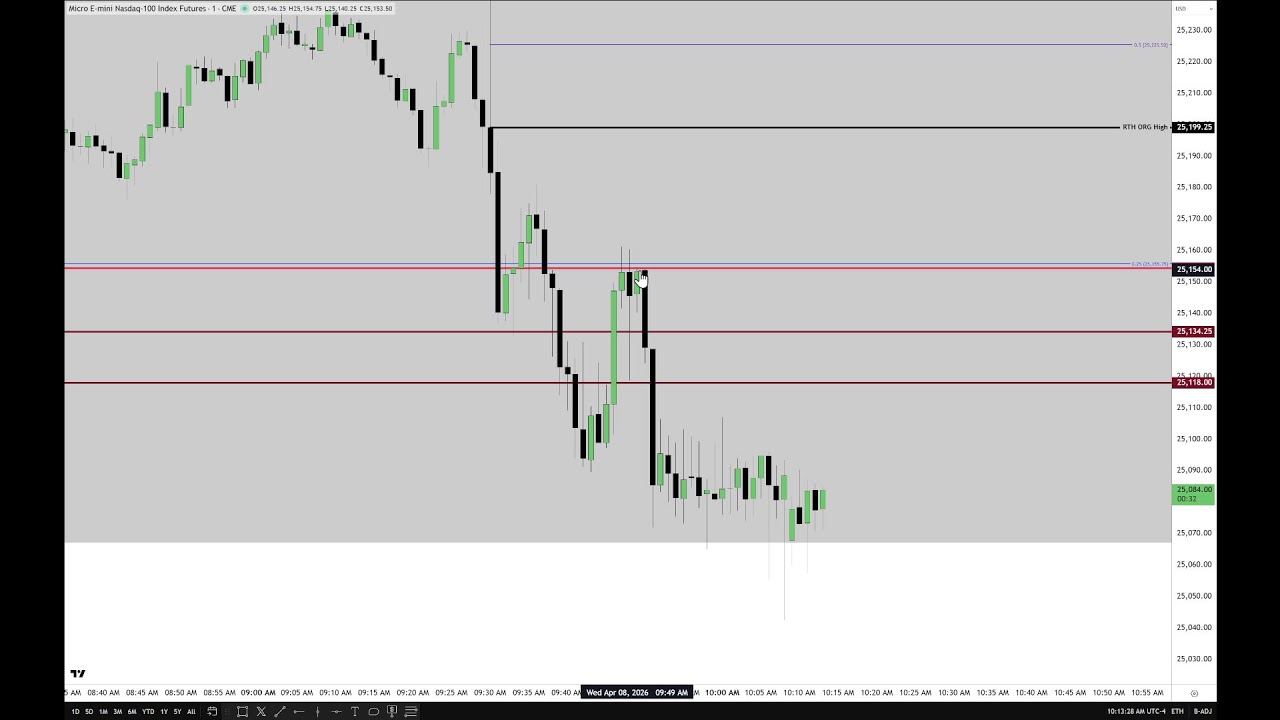
    – Practical rules highlighted: use 30‑minute opening ranges (not 15‑minute) to identify displacement and the first‑presented fair value gap—especially for the London open (1:30–2:00 AM ET) and equity open (9:30–10:00 AM ET); New York “kill zone” is treated differently (7:00–9/10:00 AM ET) because it covers many instruments.
    – Trade setups: look for engineered liquidity, false breakouts (his “turtle soup” concept), inversion FVGs after buy/sell liquidity raids, and time‑based, rule‑driven occurrences that algorithms reliably reproduce.
    – Practical advice and tone: study the longer, detailed content rather than short clips, follow the specific rules he teaches, manage risk/take profits (he points to prior warnings on ENQ, Bitcoin, gold), and remember these setups are probabilistic, not perfect.
    – He reiterates ownership of these methods, frustration with misrepresentations by others, and that his aim is to protect traders and teach durable, repeatable rules.

  • Tumbling Towards Excellence | November 1, 2025

    Summary:

    – Negativity and toxic influences drain energy and slow progress; filter them out and avoid blaming external factors for your results.
    – Trading (and any worthwhile pursuit) is hard, slow, and requires patience — there are no shortcuts or guaranteed fast paths to profitability.
    – Own your mistakes, follow a rule-based model, and develop discipline; if you cannot adhere to rules, trading will not work for you.
    – Avoid hype and influencer-driven promises (flashy cars, instant riches); superficial displays of wealth don’t equal excellence or lasting happiness.
    – Learn by disciplined practice: backtest, journal, and carry out topical studies (focus on one topic each week) to build pattern recognition and subconscious intuition.
    – Specialize in a single market, start with very low leverage (micros/minis), and only scale after months of proven, consistent performance.
    – Expect and accept losing trades and drawdowns as unavoidable; use them as learning opportunities rather than reasons to switch strategies or chase the next guru.
    – Define excellence and success for yourself without rigid timelines; let progress be organic and celebrate incremental gains (even small consistent profits).
    – The mentor’s goal is to teach independent, principled traders who can follow a consistent model, not to create dependence or sell illusions.